

Solar Decathlon India
Infosys, Mohali
Sep'20 - Apr'21
Finalist (Top 6)
Innovation|Engineering Systems|Affordability
Climate Change is jeopardising our lives and livelihoods. Extreme weather events are more frequent today than ever before. Every summer, more and more Indian cities experience temperatures above 40ºC. Storms, changing rainfall patterns, floods and rising sea levels, water crises and droughts are resulting in loss of lives and property. To limit global warming to 1.5°C and support India’s Nationally Determined Contributions to the Paris Climate agreement, we must achieve a 50% reduction in building energy demand by the year 2050. Accelerated action starts with net-zero-energy-water buildings that are resilient to climate change. In Solar Decathlon India 2020-21, we proposed a NetZero-Energy-Water Office Building design solution to our project partner Infosys for their Phase II extention at their Mohali Campus.
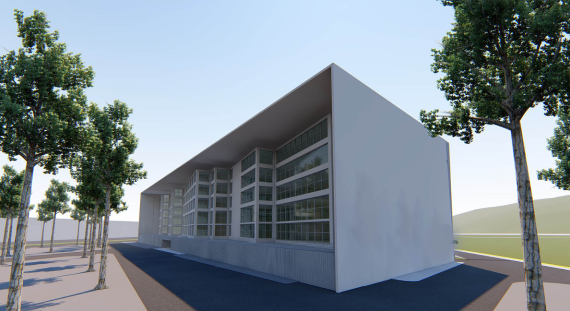
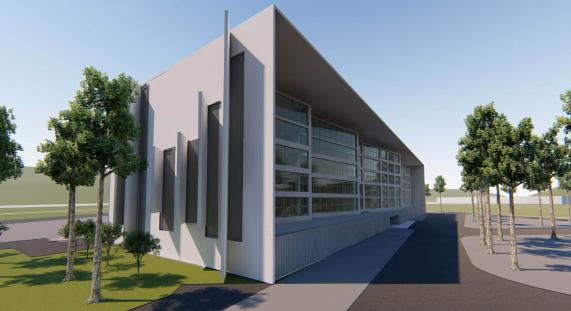
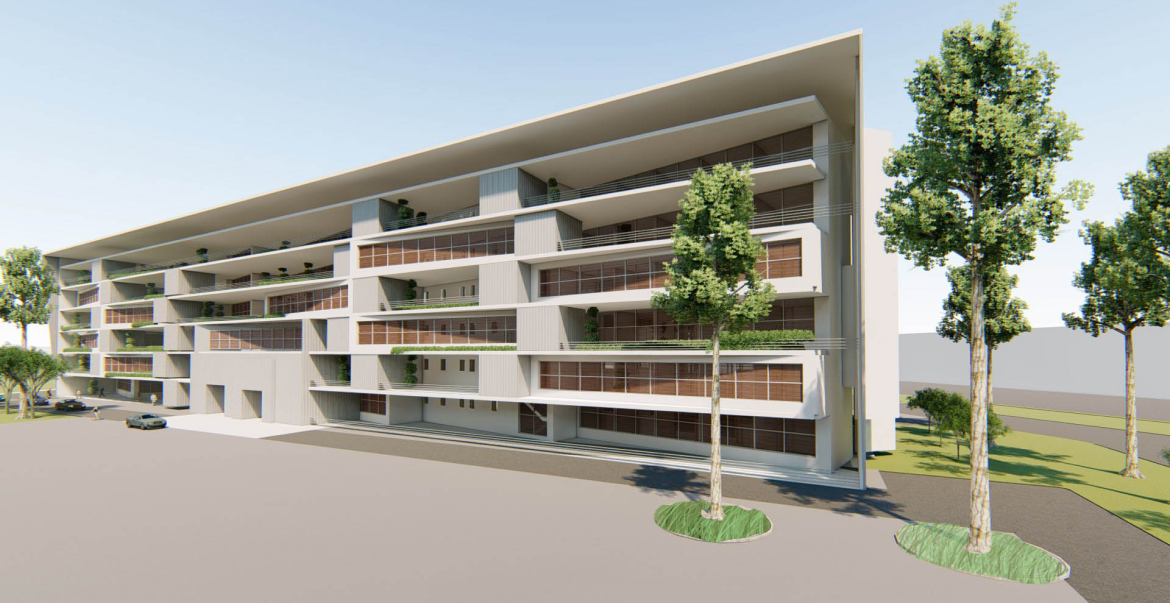
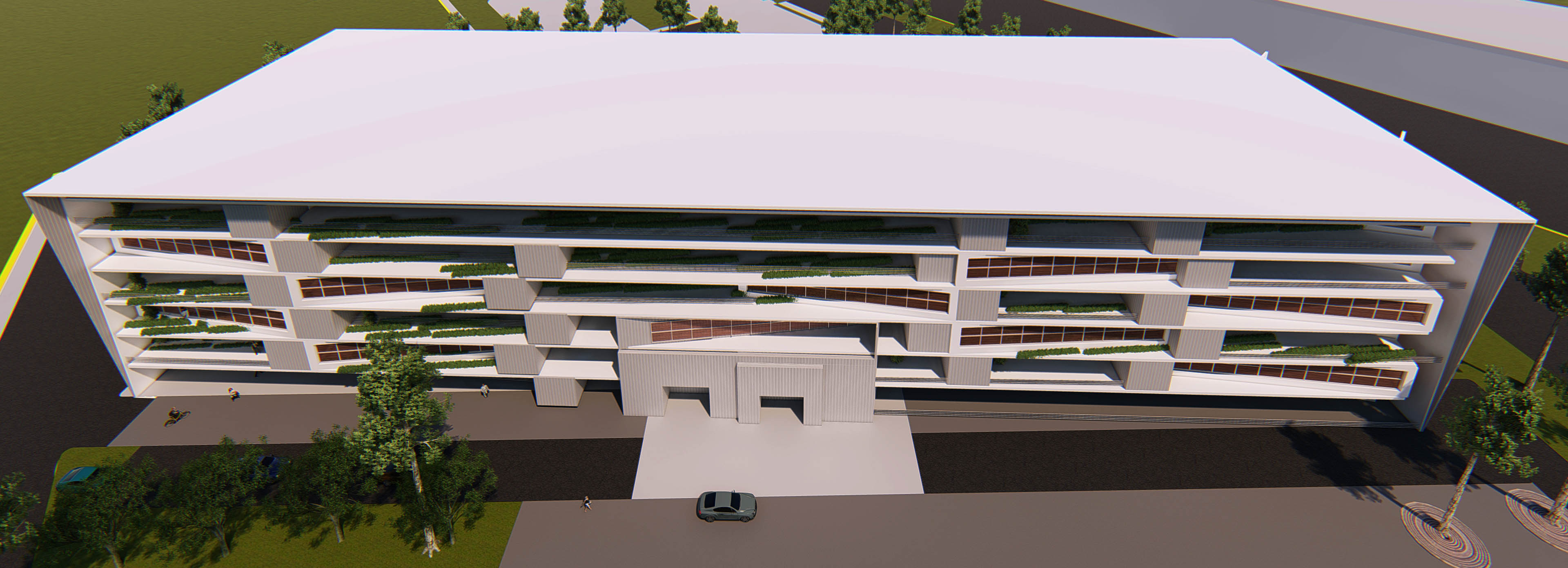
Our main goal for this project was to design a net zero energy office building. We developed techniques and designed energy and water efficient, affordable and resilient building with careful considerations to comfort, environmental quality and market potential. With innovative techniques and design consciousness, we optimized the space design, façade system, and building management system.
We reduced water usage through recycling of water by reduce, reuse and recycling methods, proposed onsite energy generation through solar, wind and biomass energy sources. We came up with a solution that is resilient which has the ability to reduce the magnitude and/or duration of disruptive events.
By using energy efficient techniques like efficient lighting design, optimized daylight, shading devices, optimized orientation and shape through simulations on various software's and considering all the design guidelines, we tried to provide a climate responsive and efficient design.
Special features of this building are windows having double glazed glass with low u value, Cavity walls with insulation, hollow concrete blocks, Sun exposed roof is insulated, use of efficient plumbing fixtures, lower flow rates in water taps and use of control systems, installation of sensors and usage of locally available materials.
I was incharge of the contest "Innovation". I was continuously giving inputs during the research phase. Under innovation contest, i proposed sensorless thermal comfort monitoring and sensorless occupancy prediction system. This system uses Reinforced Learning model to analyse the data-transfer happening from any node to predict the work efficiency of the user working at that particular node, and hence predicting his/her thermal comfort. This system is very much affordable and scalable as it is a software based retrofit and doesnt need any extra sensors to be installed.
I was also working with Materials team to select the appropriate materials, and with engineering systems team in sizing of HVAC systems, and in selecting apt electrical systems.